Tuesday, September 22, 2009

Super Mega Mario Kart Panorama.

As those of you who read Copperpott's Cabinet of Curiosities may be aware, I have a bit of a yen for panoramic pop-culture art. And so much the better if that piece happens to be the collaborative effort of over forty very talented artists, and based on one of the greatest Nintendo games of all time - one that, appropriately enough, is itself founded on the principles of collaboration, competition, and group play.

Thus we have The Mario Kart Collab, v.0.1: the (nearly?) final product of an assortment of artists from DeviantArt, each taking one character and their vehicle from the Mario Kart games and rendering it in their own unique style.

Click on the image below to see the full-length work.


(Mario Kart Collab, v.0.1, by various)

(I hope that Themrock and Deviantart forgive me for the direct link to the larger piece, but Photobucket refuses to host such a large file for me without resizing it first, and trust me, you want to see it in all of its glory.)

To quote Tara from Purple Peep Bits (and Birdo artist):

Almost a year ago I was invited to take part in this collaboration project that my good friend Dirk was throwing.

It's a collaboration done with over 40 of the finest artists you can find on DeviantART. Independent and people who already work in the industry came forth for the project from all over the world.

It's an absolute MUST to full view the original picture and check out everyone's interpretations of each driver. They're all fantastic!

Driver artists:
Toad - Mike Jungbluth
Baby Mario - Patricio Betteo
Dry Bowser - Robb Mommaerts
Luigi - Dirk Erik Schulz
Funky Kong - Hugh Freeman
Yoshi - Henry R. Frew
King Boo - Grim-Amentia
Princess Peach - Makani
Baby Luigi - Adrián Pérez
Mario - Andrew Kauervane
Donkey Kong - Fubumeru
Baby Peach - Basakward
Waluigi - Dapper Dan
Bowser jr. - Erin Hunting
Bowser - Richard J. Smith
Dry Bones - Neilando
Birdo - Myself
Daisy - Vernavulpes
Diddy Kong - Becky Dreistadt
Wario - Zach Bellissimo
Toadette - Kyle A. Carrozza
Petey Piranha - Sam Mckenzie
Koopa Troopa - Mario González
Shy-Guy - Benjamin Anders
Para Troopa - Emma Särkelä
Rosalina - Der-shing Helmer
Baby Daisy - Chris E.
Lakitu - Sabrina Alberghetti

Background Characters:
Luismario
Michael Perez
Explosiv22
Emily Jayne Weber
Frobman
Yves Bourgelas
Cotton-Gravy
Lindsay Smith
E. D. Thweatt
Adrian vom Baur
Psycho Time
Cheezadiddle
Evanatt

I really hope that "I am 8bit" checks this out.

I second that. I want a poster-sized print of this for my living room so badly it's not funny.


(via Offworld)

Saturday, September 19, 2009

Ahab vs. Dick


("Ahab vs. Dick" t-shirt from Split Reason, via infinitelives.net)

Tell me you didn't have this EXACT mental picture in your head while reading "Moby Dick".

(Split Reason also has shirts to satisfy your Half-Life, Donkey Kong, and Ghostbusters II fanboy\girl needs.)

Thursday, September 17, 2009

My Personal Nemeses: Five Video Game Villains Who Still Haunt My Nightmares


(Pyramid Head Pony, by oOneondragonOo)

I think it's safe to say that over the course of our lifetimes, we've all come up against countless videogame bosses, be they Mother Brain, M. Bison, Big Boss, or whatever adversary waits for us at the final terminus point of our long journey. Some of them were surprising pushovers, some of them were frustratingly tough, and a handful managed to provide a satisfying exclamation point to the narrative we'd gotten wrapped up in. Most of them, however, represented little more than closure, and once we'd beaten the game, we stuck it on a shelf to collect dust and rarely thought of them again.

That said, we all have our own personal videogame arch-rivals - the ones that stick in our craw and evoke an inappropriately emotional reaction. The ones who, even after you've dealt with them, still manage to appall you with their grandiosity, their monstrousness, or their irrationality. Here are mine:

5. GlaDOS (Portal, 2007)


(GlaDOS, by Phantom Quasar)

I've had girlfriends like GlaDOS: passive-aggressive, pedantic, and homicidal. Some of them even spoke in that same pitch-shifted monotone. But what really gets me about GlaDOS, the ubercomputer administrating Aperture Laboratory's portal-gun experiments - what really and truly drives me up the wall to this day - is how impervious she is.

I don't mean in a material sense. In fact, your final confrontation with her isn't really all that difficult compared to some other end-bosses. What I mean is that she's impossible to get through to. Even while you're disassembling her and she's going through her full range of pre-programmed emotional states, from admonishing mother to enraged harpy, there's no talking to her. It's like every disagreement I've ever had with anyone which has turned into a full-scale screaming match, rolled up into a single showdown, which also happens to involve a state-of-the-art weapon that can bend space.

GlaDOS is like a female version of HAL 9000 from 2001: A Space Odyssey (which, of course, is referenced in the final moments of your fight with her). When HAL refused to open the pod bay doors for Dave, you wished that he had a neck so you could wring it; when GlaDOS tries to kill you, she does so with such specious reasoning that you get distracted by and aggravated with the irrationality of her underlying convictions. Beating her without saying a word (and honestly, what COULD you really say?) feels like walking away from a heated disagreement and slamming the door behind you. It might be the best thing to do, but you're left feeling drained and emotionally unfulfilled.

Even the end-credits song is passive-aggressive.


4. Sephiroth (Final Fantasy VII, 1997\Kingdom Hearts, 2002\Kingdom Hearts II, 2005)


(Sephiroth, by Pepper-Tea)

Sephiroth shows up on most lists of this ilk. There's good reason for that, I suppose: he's menacing, he's a former cohort who's turned to the dark side, he even has his own spooky theme song.

Truthfully, while Final Fantasy VII was a pretty incredible gaming experience and Sephiroth provided a satisfyingly complex climactic battle, I never thought all that much of him until he showed up in the Kingdom Hearts games. And it was there that I truly began to fear him.

In both games in the series, Seph shows up as an optional boss. I'll repeat that: defeating him is OPTIONAL. It's not necessary to beat Sephiroth in order to finish the game. And that is what makes me hate him so very much, because when I play a game, I'm going to get my money's worth and do what it takes to eliminate all potential threats. I'm a HERO, goddammit. That's my JOB.

He has no right whatsoever to be as hard as he is. I still tremble at the memory of his devastating opening attack, which drains your health down to one lonely, desperate point. He's harder than any other boss in Kingdom Hearts; hell, he's harder than any other videogame boss in history.

I never managed to best him in either game. I never even managed to make a decent case for myself. I just hung my head in shame, reloaded from my last save point, and went to kill Surly Pete or Walt Disney's Evil Twin or whoever the hell was next in line.

Fantasy movies and poorly-written genre fiction have led me to believe that no matter how powerful an opponent is, the good guy will win out in the end, usually through the implementation of some kind of deus ex machina. But despite having resolved the majority of evils plaguing the Final Magical Fantasy Kingdom, I know in my heart that there is still one obstacle that I was never strong enough to overcome. And sometimes, in the wee hours of the night, I'll wake up and be reminded of that with brutal clarity, and that's when I crack open the flask of cheap whiskey and contemplate my inadequacy as a gamer.

3. Pyramid Head (Silent Hill 2, 2001)


(Pyramid Head, by Insanity Binge)

I can hardly put into words the primal terror that Pyramid Head inspires in me. Videogames run rampant with villains and level bosses and all manner of creatures which, for one reason or another, intend you grievous personal harm. Pyramid Head, on the other hand, is genuinely monstrous. The first time you encounter him, while hidden in a closet in an old apartment complex because Silent Hill 2 is the kind of game where you're so terrified you just want to find a small, dark place and curl up in a fetal ball, you see him RAPING OTHER MONSTERS. He's not doing this to freak you out. He doesn't even know you're there. HE'S DOING IT BECAUSE THAT'S WHAT HE DOES.

The denizens of Silent Hill - the ones trying to kill you, I mean - are all pretty disturbing, and you learn pretty quickly that your smartest strategem is running the hell away from them. With Pyramid Head, that's your only option. You can't kill him, you can't slow him down, you can't do ANYTHING except flee from him in gibbering, abject panic. Do you know how he eventually dies? He commits suicide. That's right, the only one capable of beating Pyramid Head is Pyramid Head.

Most horror games are of the 'ugly thing pops out at you from nowhere and tries to kill you' variety, and while that might make you jump out of your seat once or twice, it's nothing compared to the innate blocks of solidified dread used in the manufacturing of the Silent Hill series. Pyramid Head is the capstone of that architectural abortion. And what is possibly the worst part of it all is that you come to understand that he, like all the rest of it, is a product of your own suppressed subconscious. You created him. Somehow that makes him so much worse.

2. Mantorok (Eternal Darkness: Sanity's Requiem, 2002)


(I couldn't find a picture of Mantorok so instead here's a visual
metaphor for what would happen to your fragile human mind if I HAD)

Eternal Darkness is a game that never really got its due. Despite being critically acclaimed as one of the best titles to be released on the GameCube, it was also a survival-horror actioner on an overtly family-friendly console and never found its target market. Unfortunate, because it is one of the most incredible gaming experiences I've ever had in my life. I bought a GameCube solely for Eternal Darkness, and held onto it for far longer than I needed to because I couldn't bear to part with the game.

I first played Eternal Darkness in 2002. My brother and I went over to a friend's house, and after drunkenly tooling around with Mario Kart and Soul Calibur, our mutual acquaintance threw it in. We spent a solid six hours that night playing Eternal Darkness, passing the controller to whomever was next in line whenever things got too intense - which happened with admirable frequency. But for the life of us, we couldn't stop; it was one of those rare moments of total videogame immersion, and one which I was gratified to discover was not diluted when I finally obtained a copy of my own.

It's difficult to sum Eternal Darkness up in a few paragraphs, and without giving anything away. Suffice to say, you play each of twelve chapters as a different character from different key points in history, from a Roman Centurion to a medieval Frankish monk to a Canadian firefighter in Iraq during the Gulf War to the protagonist's own grandfather in the 1950s. Magic (not the cheerful "I cast Magic Missile!" RPG flavour, but the sinister "unholy pact with unspoken atrocities" variety) is slowly introduced into a real-world setting, and often with gut-wrenching consequences. You have a sanity meter in addition to your health and magic meters, and when it runs low, horrible mind-fuckery ensues - not just to your character, but to yourself as well. You have everything from scimitars to elephant guns to cavalry sabres at your monster-dispatching disposal.

And at the end of the day, you come face to face with Mantorok, the Corpse God - or at least, his once-human vessel. Mantorok is one of the few times in gaming history where Lovecraftian entities in all their originally-intended incomprehensible power and malice have been done RIGHT. You know you don't have a hope in hell of actually doing him the least bit of harm - all you can do is cling to whatever sanity you have and hope to dely the inevitable as long as possible.

So why does Mantorok earn himself a place in my own-going night terrors? For starters, he's the very definition of primordial evil: he's less a bad guy than he is a primal and fathomless LAW. Like Lovecraft's Great Old Ones, he predates not only Judeo-Christian archetypes of death, destruction and chaos (the Devil, the Grim Reaper, the Black Rider) but those of all of humanity since its inception to such an extent that the very idea of him is difficult to conceive. Like contemplation of the great dark abyss of infinite space itself, the mere thought of Mantorok can drive one to madness.

But, if for no other reason, I'm still haunted by Mantorok because he's the dire nucleus of a masterpiece in narrative, engine and gameplay which deserves to be held up as the model for truly innovative videogame design, yet probably never will.

1. Ganon (The Legend of Zelda, 1986)


(Phantom Ganon, by amandaamassacre)

Ganon (who also goes by Ganondorf) was my first true pixellated foe. I genuinely LOATHED him. We initially encountered one another when I was ten - My parents gave my brother and I a Nintendo Entertainment System for Christmas, along with Duck Hunt and The Legend of Zelda. Shooting at ducks was fun for a while (though I lost interest once I realised I wasn't able to shoot that damn giggling dog), but the adventures of Link and his quest to regain the pieces of the Triforce utterly consumed me. I would run home every day after school for a year and spend HOURS playing that game. Other kids were playing catch and setting off cherry bombs in the field behind the school, but I didn't care: I had a PRINCESS to save, goddammit.

Thing is, while The Legend of Zelda offered the occasional challenge, it wasn't a particularly HARD game to play through. That is, until the final showdown with Ganon, the dark mastermind behind all the wrongs you've worked so hard to right. I probably spent as much time trying to beat him as I had on the rest of the game combined. For starters, the bastard was invisible - and he could TELEPORT. Secondly, because I'd saved repeatedly over the same save-slot instead of spreading it out over multiple slots (a tendency I still have to this day), I went in to face him with half of my health hearts missing and devoid of the silver arrows or a proper shield. And finally, because these were still the days when the Internet was still in the hands of military nerds and I wasn't lucky enough to have a subscription to Nintendo Power (and also I was ten), the strategy for defeating him was beyond my comprehension. I would swing my sword wildly in the hopes that he might walk into it, all the while a sitting duck for his stupid fireballs.

I am, admittedly, a controller-thrower when I get frustrated, and my poor NES gamepad took a hearty beating during those weeks. To its credit, it bore up admirably -- until the day that I finally beat Ganon and, in a fit of martial triumph, flung the controller so hard that it hit the stone hearth of the family-room fireplace and exploded into shards of grey plastic and green circuitboard.

So Ganon, I may have bested you, but in the end, you had the last laugh. And I still hate you for it.

Thursday, May 21, 2009

Mega Man and Assistants


(left to right: Batman, The Maxx, Wolverine, Juggernaut, Mega Man, Hellboy, The Punisher, Deadpool, Savage Dragon.)


Click through for full-size, or here for the original version.

By Jon Sommariva, AKA Red-J.

Just thought I'd share that.

Tuesday, April 21, 2009

Indie Games Are Go!

A while ago (well, two and a half years ago), I posted about Limbo, an independently-developed game which, it seems, never made it off the ground. It's a shame, as I thought the monochrome style and retro 2D side-scroller engine were very original and unlike anything else to be seen in the then-current crop of games, indie or studio.

Things have changed since 2006, though. There's been an upswing of independent games released in the last few years, motivated not by a desire to tap into and exploit a particular market of gamers by rehashing the same old genres and tropes, but instead to take the medium in new narrative and stylistic directions. Some pretty incredible games have come out of this movement. Here's my quick rundown of recent indie games that you should make a point of checking out.

11. Judith (distractionware, free, PC)


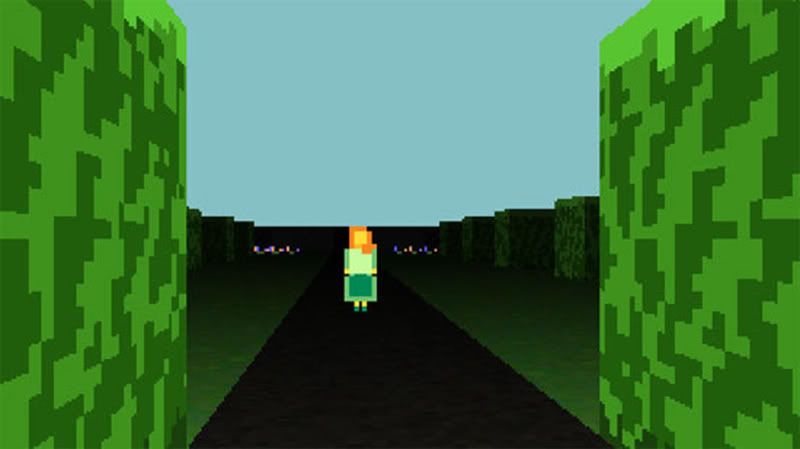
Judith is everything an off-the-cuff indie game should aspire to: simple interface, lo-fi graphics, and a focus on plot. There are no monsters to kill, no real puzzles to solve, just an interactive story which you can run through in about half an hour. It's built on the Wolfenstein 3D engine, but the textures hearken back to the old AGI look of the Sierra adventure games of the 1980s and will be eminently familiar to anyone who grew up playing PC games during that decade.

10. Fez (Polytron, upcoming, platform TBA)


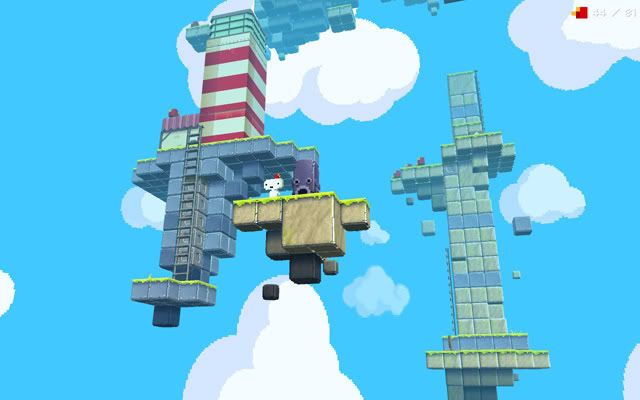
Although it's not yet released, Fez is worth keeping an eye on for no other reason that it looks to be graphically breathtaking (It won the Excellence in Visual Art award at the 2008 Independent Games Festival, and was nominated for the Design Innovation award as well). It's nominally a platformer, in which Gomez, a two-dimensional character, explores a world that has become three-dimensional. Much like the classic novel Flatland, Fez delves into the nature of dimension, space and geometry in a way that games have rarely done in the past.

9. Audiosurf (Dylan Fitterer, $10 through Steam, PC)


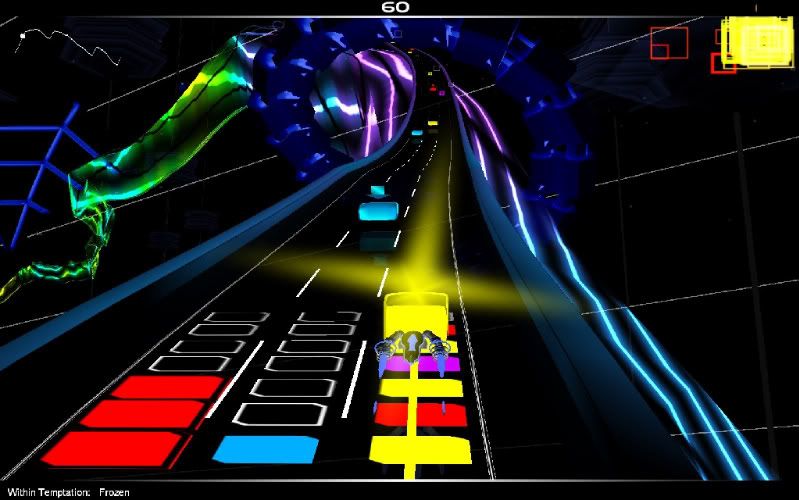
One of my fondest videogame memories is of playing the classic DOS game SkyRoads on my 386 PC in the mid-90s, and so when I discovered AudioSurf, I was enamored with it from the start. AudioSurf builds on the racer format of SkyRoads and allows the player to create a track synchronised to an MP3 of their choice: by analysing the song, AudioSurf determines your level's speed, position of blocks and obstacles, and background environment. There are a number of ships available, as well as an impressive array of game-mode options. In all, the game manages to take a done-to-death genre and inject new life into it.

8. Kingdom of Loathing (Asymmetric, free\donation, browser)


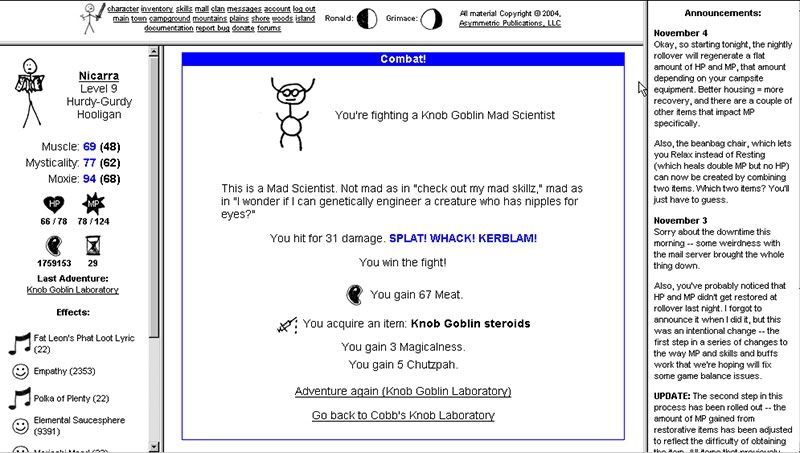
Kingdom of Loathing is the xkcd of MMORPGs. Visually, the game is nothing to write home about (in fact, with the exception of a few crude stick-figure icons, it's primarily text-based), but it has gained a considerable following thanks to its clever design and often surreal sense of humour and wordplay. KoL is an antidote to the current, bloated MMO market, playing with and subverting the conventions of that genre with open glee. It warrants a mention here because, underneath the mockery, cheap artwork, and non sequiturs, KoL is actually a fantastically well-designed game, offers a startling amount of content, and has an interface which is both unique and totally intuitive.

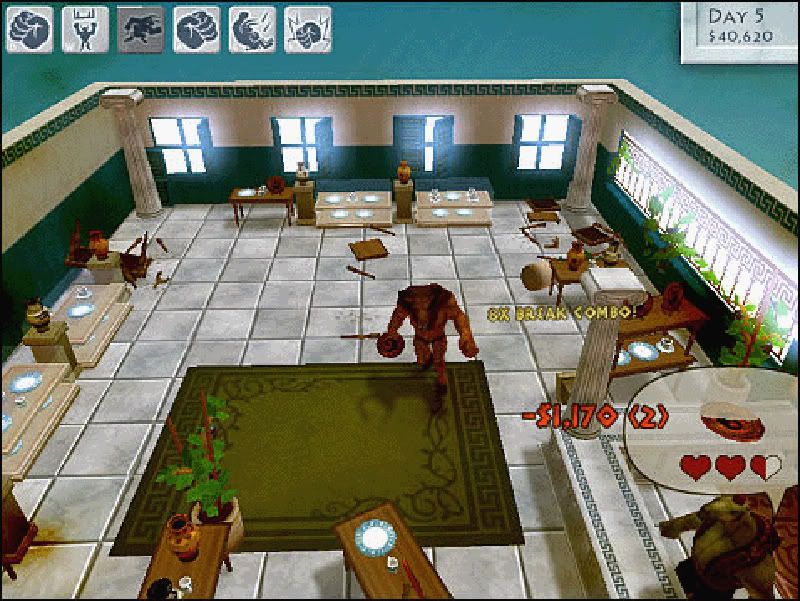
7. Minotaur China Shop (Flashbang Studios, free, Flash)


The name says it all. While playing this, I couldn't help thinking about Steven Sherrill's criminally-overlooked "The Minotaur Takes a Cigarette Break", if only in that both the game and the novel present the Minotaur as a regular working-class schlub trying to make ends meet. In the game, you play the titular Minotaur, who has found it necessary to obtain gainful employment, but the only available work he can find is in a china shop. Breaking the shop's wares loses you money; do too much damage and you enter Minotaur Rage mode, which really needs no explanation. Appropriately, the controls have been designed to make your Minotaur unwieldy, slow to stop, and, well, literally a bull in a china shop. Simple, straightforward and graphically appealing.

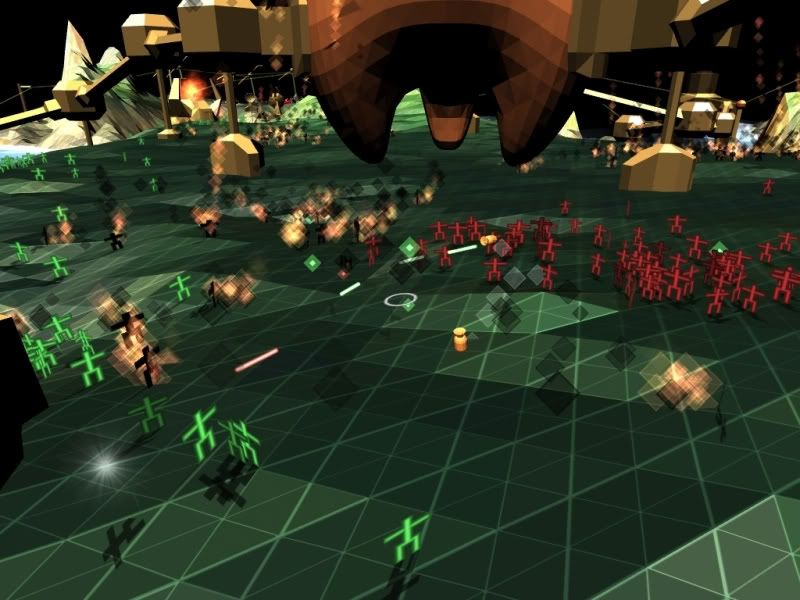
6. Darwinia\Multiwinia (Introversion, $16.60 each through Steam, PC\Mac\Linux\XBox 360)


Darwinia, and its multiplayer sequel Multiwinia, is unlike any other game ever made. Nominally it draws on the real-time strategy model, but the end result bears little if any similarity to games of that genre. The game takes place inside a digital universe created by one Dr. Sepulveda, populated by AI polygon creatures, and the player is tasked with combating an invading virus which threatens to undo all of Sepulveda's work. RTS elements come into play here, but over time an element of artificial evolution is introduced, hearkening back to Conway's cellular-automata model and its ilk. Like many indie games, Darwinia and Multiwinia embrace a distinctly retro-gaming approach to design and interface, and ultimately result in a totally immersive universe which is better experienced than described.

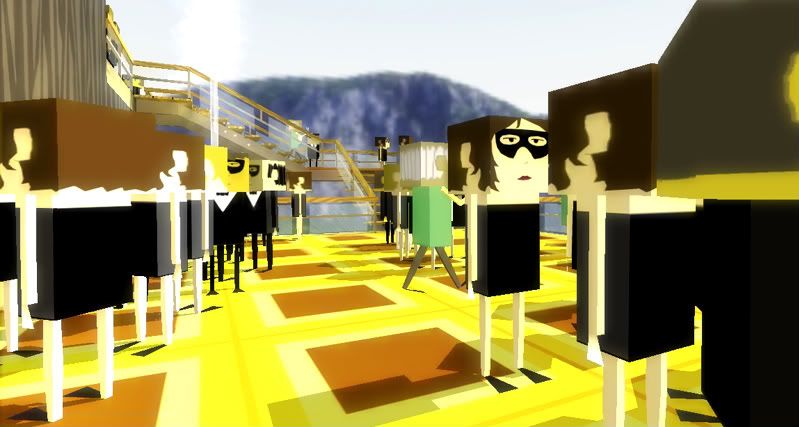
5. Citizen Abel: Gravity Bone (Blendo Games, free, PC)


Gravity Bone is a short, first-person adventure game built on the Quake II engine, but revamping it so drastically that it has become an entirely new beast. In the game, you play a secret agent inhabiting a 1960s spy-flick world attempting to unravel, as is your stock in trade, a mystery. All the characters in this world resemble papercraft dolls a la Cubees (an artistic decision both clever and practical, given the Q2 engine's limitations) and one can't help but be reminded of LucasArts' legendary Grim Fandango or Terry Gilliam's Brazil (from which it plunders its soundtrack). It can be played from start to finish in under half an hour, has a plot that makes absolutely no sense, and - without giving anything away - seems to serve little other purpose, in the end, than as an elaborate prank on the player. But practical jokes, if designed well enough, can be an art-form unto themselves, and Gravity Bone is a case in point.

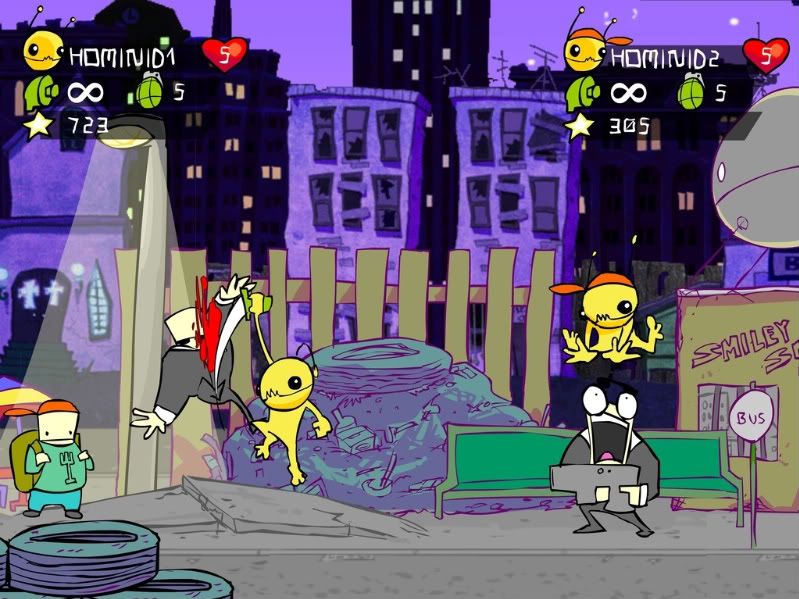
4. Alien Hominid (The Behemoth, $10, Playstation 2\XBox 360\Gamecube\Xbox\GBA\PC)


Amongst its other virtues, Alien Hominid could be seen as the indie game that finally broke indie games into the public arena. Though it started as a humble flash game on Newgrounds, it quickly developed into a cross-platform juggernaut, thanks in large part to The Behemoth's remarkable business savvy. But Alien Hominid is more than just a well-marketed indie success story; the frenetic 2D sidescroller features entirely hand-drawn artwork by Dan Paladin, boasts an outstanding soundtrack by Matt Harwood, and contains numerous subtle asides and humourous in-jokes. There's also a bit of self-reflexivity going on here: when the player accesses the alien's PDA, they're able to play a simple Pitfall-style game-within-a-game. Recently, Alien Hominid was released in a High Definition edition on XBLA, and the updated resolution proves without a shadow of a doubt the talent that went into the game's design.


3. Castle Crashers (The Behemoth, $15\1200 Microsoft Points , XBox 360)


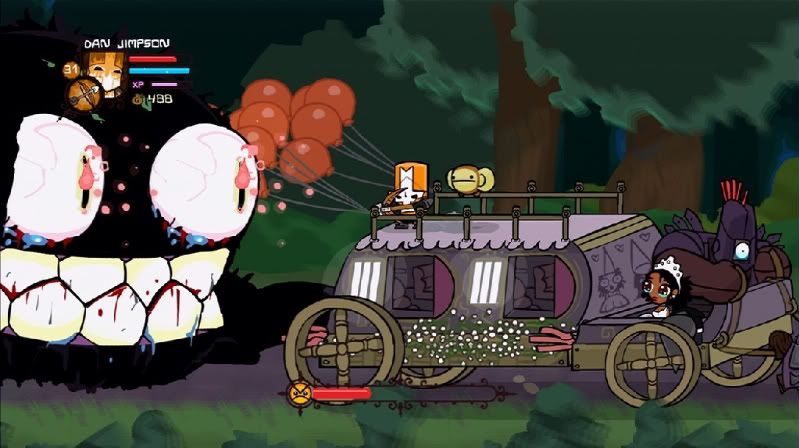
If Alien Hominid was built on the engine of run-and-gun side-scrollers like Contra and Metal Slug, The Behemoth's followup Castle Crashers takes it up a level and riffs on the arcade four-player beat-'em-up engine of Golden Axe and Final Fight. The game's graphics are of a similarly hand-drawn style as its predecessor, but are cleaner, more detailed, and far, far more bloody. What makes Castle Crashers stand out, like many of the games on this list, is that it breathes new life into a familiar genre: it brings in elements of RPGs, player-vs-player, and 'cute animal sidekicks', each with a different supplemental ability, it contains more cartoon gore than one might ever reasonably expect, and the character, monster and level designs are both original and stylistically consistent. Perhaps its greatest appeal, though, is that the creators offer downloadable-content packs, unlocking new characters, weapons and abilities, resulting in an entirely playable work-in-progress with near-infinite replayability.

2. World of Goo (2D Boy, $20, PC\Mac\Linux)


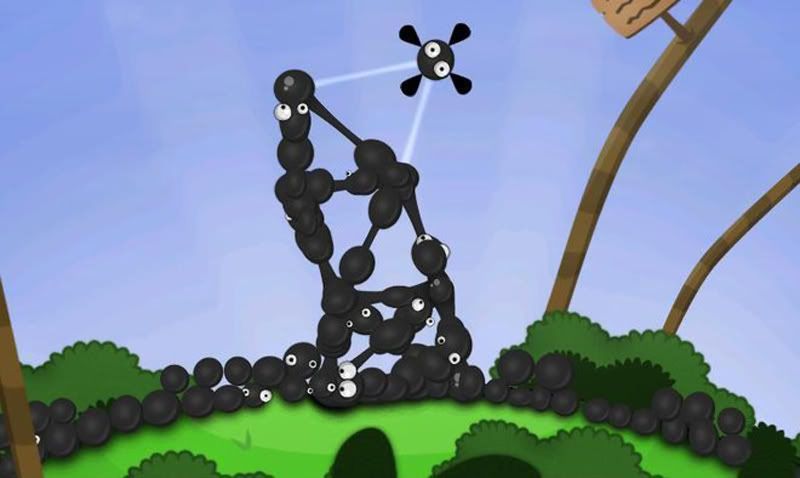
World of Goo is the indie-gaming equivalent of a Fellini film: impressionistic, dream-like, and justifiably critically-acclaimed (the game has even inspired some Svankmajer\Fellini-esque short films). At face value, World of Goo may be best described as a Lemmings-style puzzle game - players construct towers and bridges out of sentient Goo balls in order to overcome obstacles and achieve obectives. What is most impressive about World of Goo is how it juxtaposes visual artistry with physics - gravity is your primary foe, and the solution to most of the game's levels lies in building the most structurally-sound architecture. The excellent soundtrack by Kyle Gabler was released as a free download (it can be grabbed here) and designer 2D Boy has maintained an admirable on-going dialogue with players and fans through his blog.

1. Braid (Jonathan Blow, $14.99 on Steam or 1200 Microsoft Points on XBLA, XBox 360\PC)


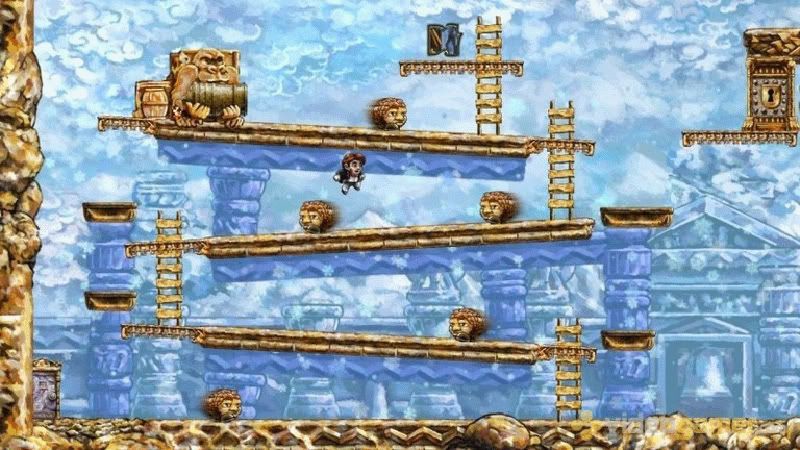
Jonathan Blow's Braid is the Citizen Kane of indie games. It completely overhauls the concept of what games can and should do, and playing it is a near-transcendental experience. You are cast in the role of Tim, a tie-wearing 2D sprite who must travel through six worlds of his own memory, searching for the "Princess" (here, his ex-girlfriend), but this goal might better be described as not a straight-forward 'save the princess' adventure a la Super Mario Bros. but more along the lines of trying to figure out why his relationship went sour. It's heady and philosophical - each world is intercut with Tim's simple but heart-breaking journal entries - but what Braid does that no other game has every managed to effectly pull off is how it plays with time. In, for example, Prince of Persia: The Sands of Time, the player was able to undo mistakes and reset levels by making use of a time-rewinding device, but Braid adds a layer of bittersweet nostalgia and remorse to the mix, and the time-shifting element becomes not merely a tool of convenience but an integral part of the story. Each world uses time in a different way - in the first world, Tim is able to, for example, jump into a pit and then rewind himself back to an earlier part of the level, while in the second world, he is able to carry objects with him as he rewinds - and consequently each new world requires a reconsideration of the strategies learned in the previous one. There are also self-aware references to its inspirations (ie: Super Mario Bros., Donkey Kong) and clever and unexpected solutions to the various puzzles which he encounters (at one point, Tim must assemble the puzzle pieces he's collected thus far in order to form a new platform and reach an otherwise-inaccessible area). Through it all, Blow's extraordinary vision and skill as a game designer, David Hellman's (creator of the webcomic A Lesson Is Learned But The Damage Is Irreversible) superb and supernal artwork, and unconventional classical score by Jami Sieber, Shira Kammen and Cheryl Ann Fulton come together to produce a kind of elegance rarely if ever encountered in the sphere of videogaming.

Saturday, December 6, 2008

Dotter Dotter and Bill Mudron.

I don't make a habit of posting videogame-themed art. For that matter, although there is some pretty amazing CG artwork out there, I prefer to stay away from that as well; it's sort of outside the parameters of Cabinet of Curiosities. That said, every once in a while I come across something astounding enough that I have to pass it along. Such is the case with Japanese artist Dotter Dotter's rendered NES-inspired work. Click for larger versions.


Unfortunately, I don't read Japanese, so I don't know the titles of any of these.

Anyway, while we're on the topic of Nintendo art, Bill Mudron (who's Anne Frank Conquers The Moon Nazis web-comic is long-time favourite of mine) has recently redesigned his portfolio site with an NES theme and is featuring a number of his Nintendo-y illustrations.


(Dotter Dotter's blog)
(Dotter Dotter at pixiv)
(Bill Mudron)

Wednesday, August 13, 2008

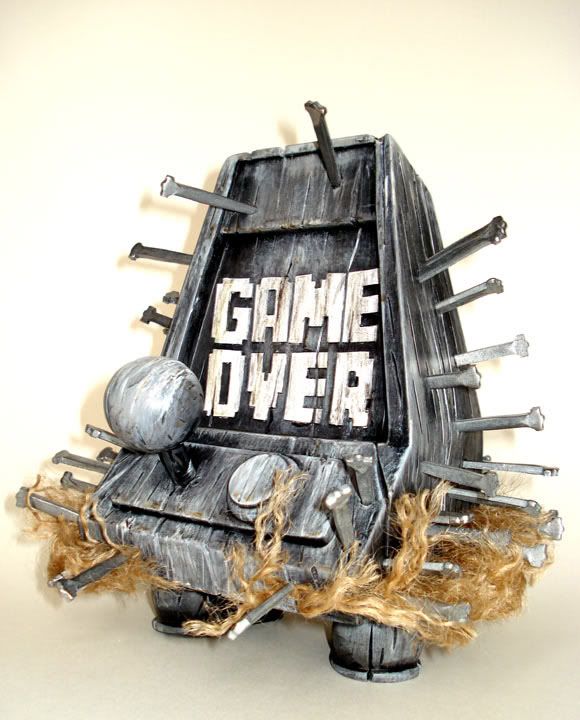
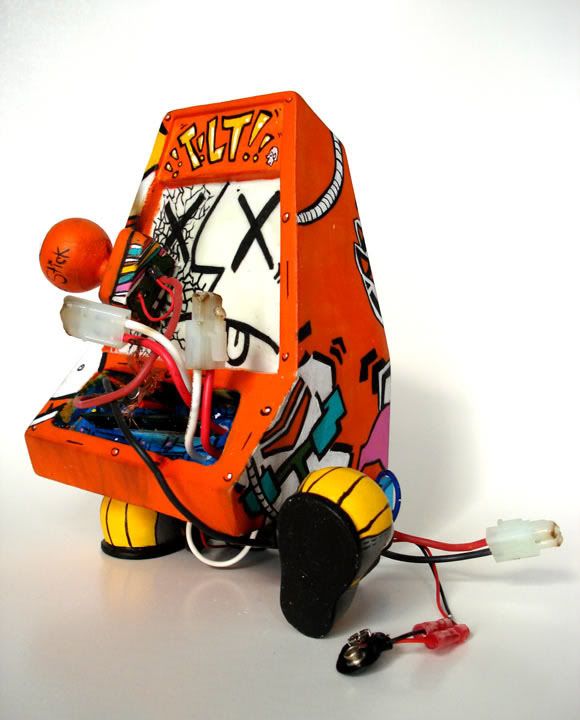
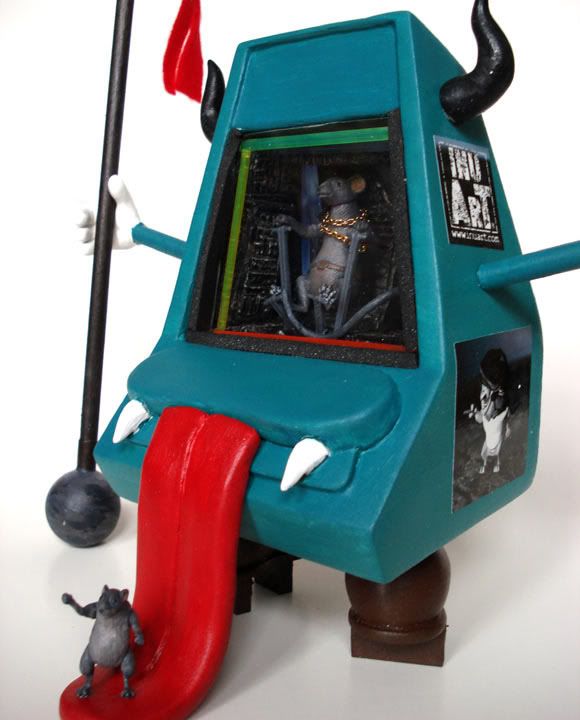
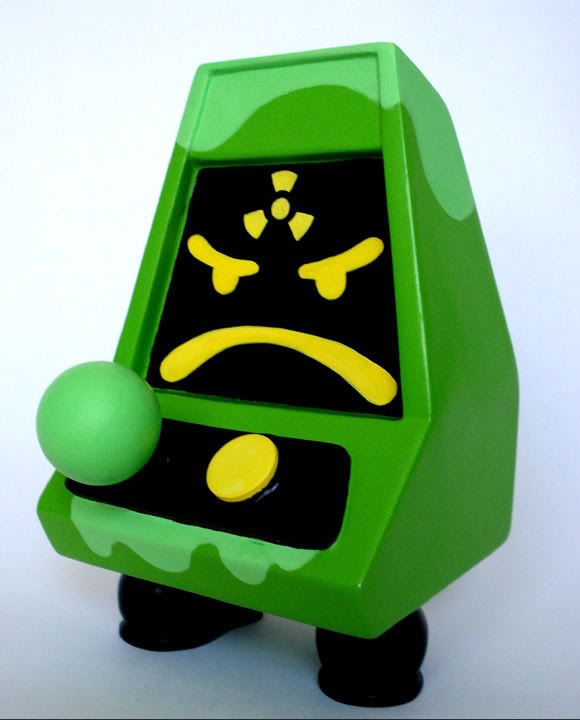
Soopa Coin-Up Bros.


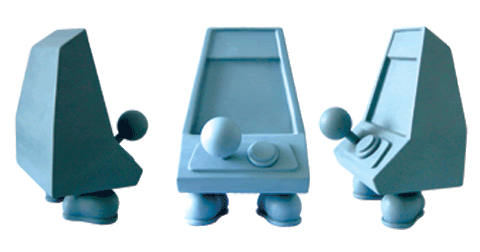
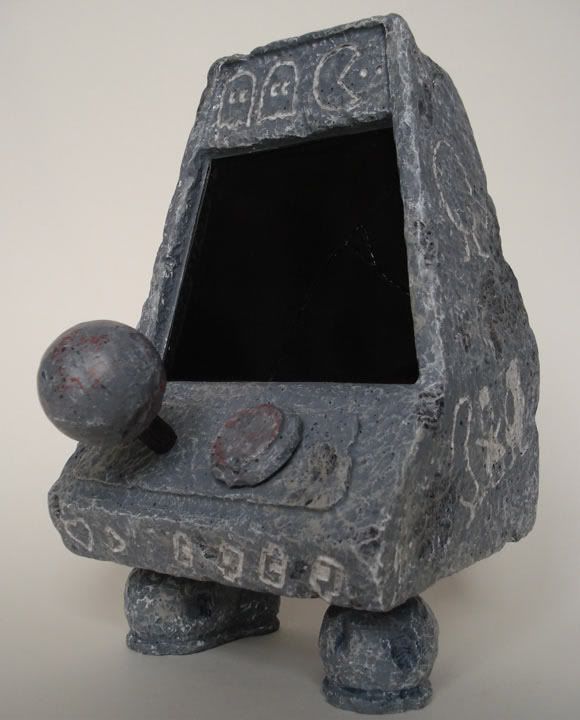
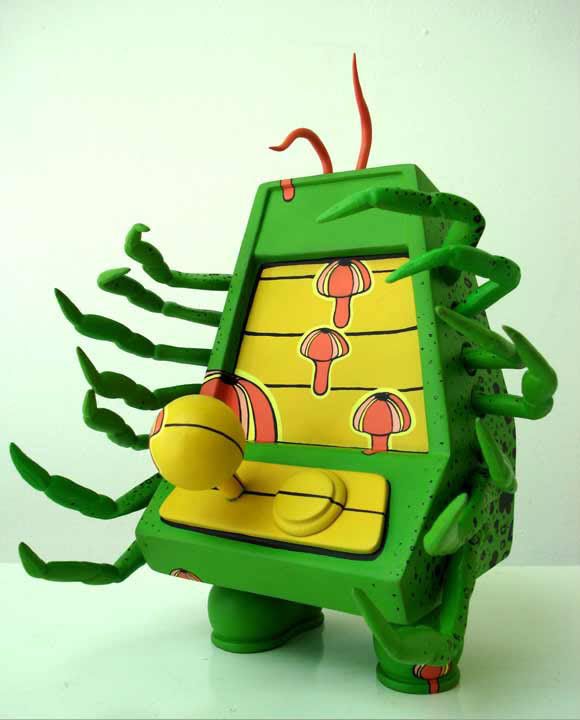
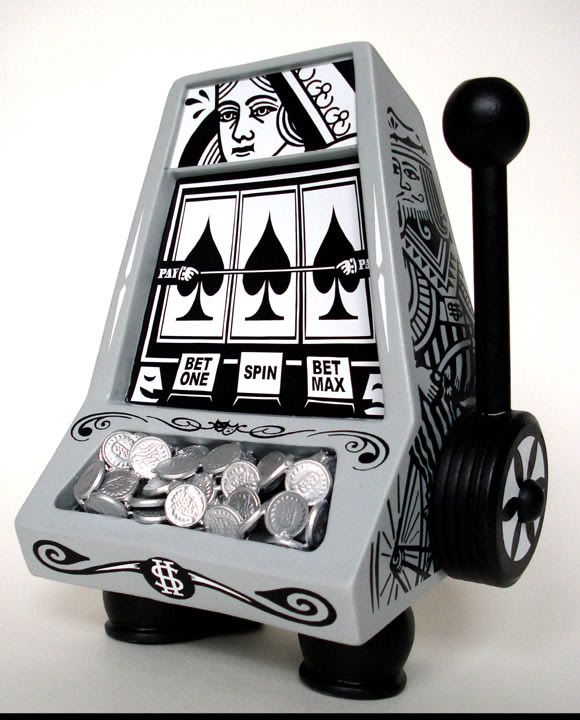
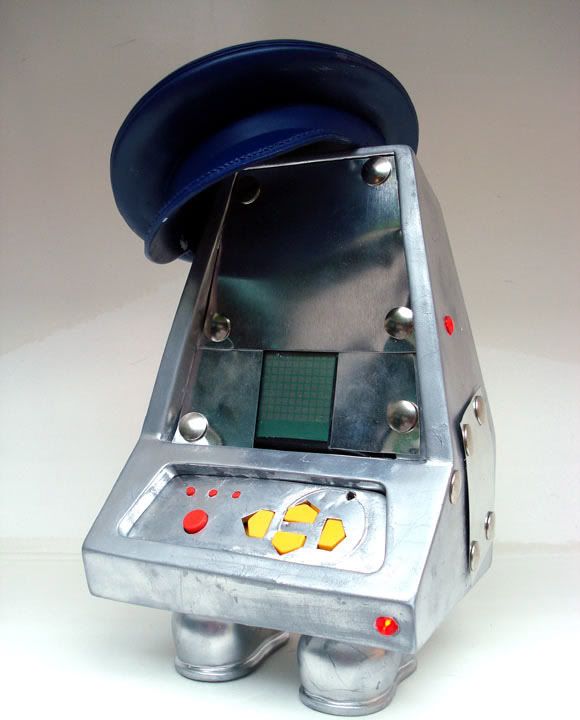
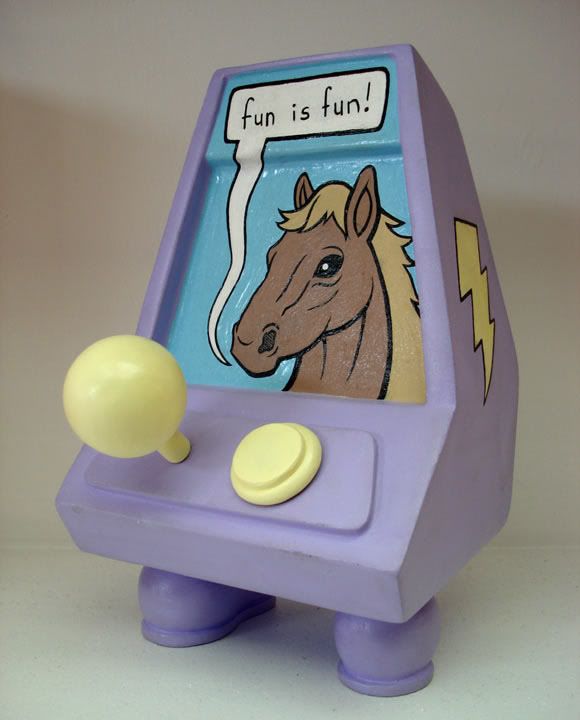
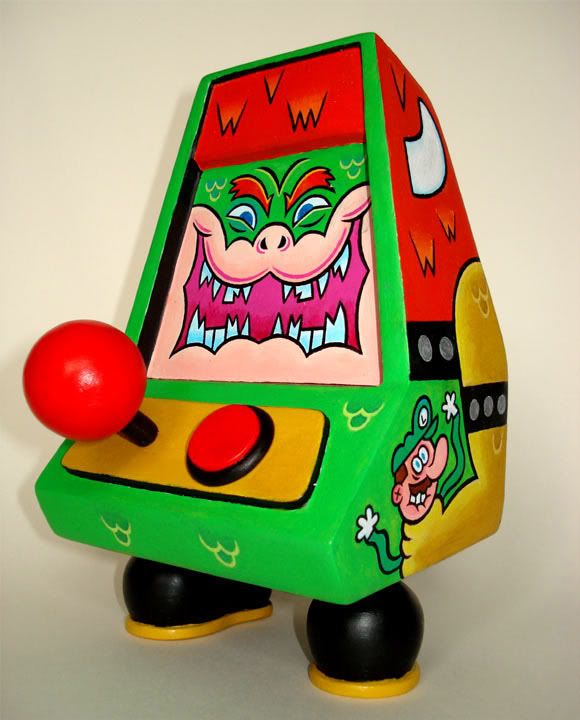
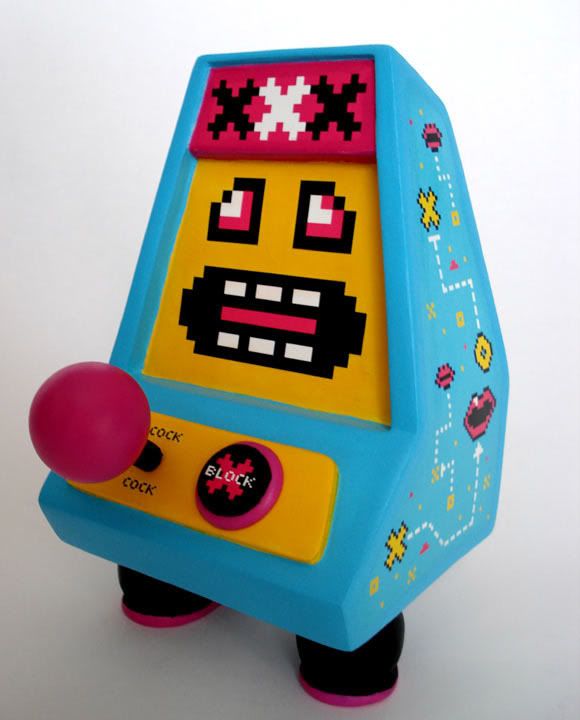
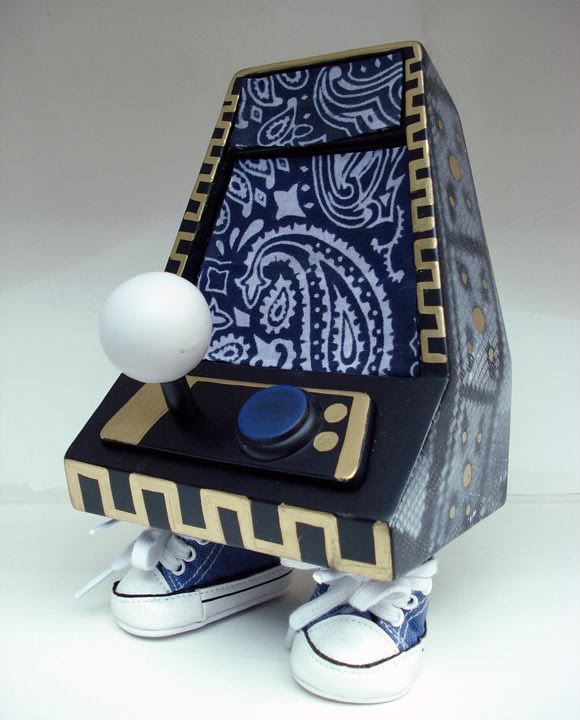
Now this is how you do a blank figure ripe for customisation. Erick Scarecrow molded the 7" Soopa Coin-Up Bros. sculpt and offered up a limited edition vinyl run for sale for the paltry sum of $30 through Esc-Toy (sadly no longer available through official channels, but UrbanRetro is selling the white edition for £22.99 while supplies last). The blank comes packaged with a hoard of stickers for the screen, marquee and cabinet.

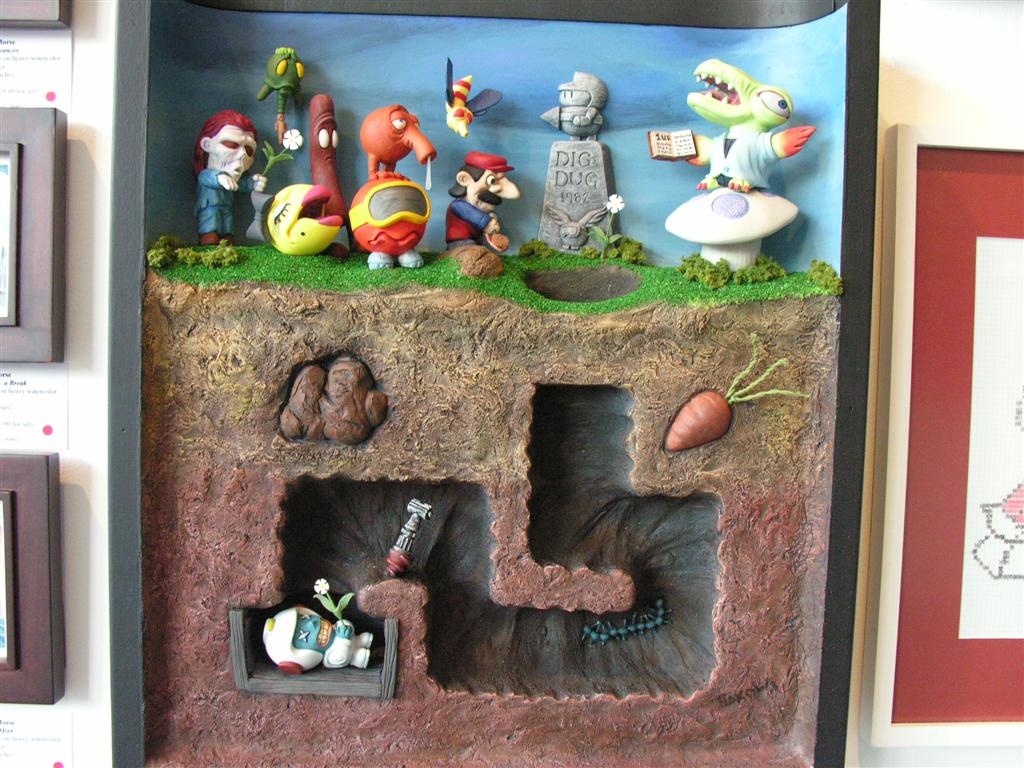
The Soopa Show was held in April at Concrete Jungle in NYC and the pieces on display were impressive, to say the least. Click on any of the images below to bask in the glory of full-size.


"Archadic", Andrew Scribner

<
"Centipox", Brandy Anderson


"One-Armed Bandit", Bucky Lastard


"Battleship", Diego Paz


"Game Over", Doktor A


"Dug Rush", Dynomight NYC


"Toy Break", George Gaspar


"Soopa Koopa", Jared Deal


"Cock Blocker", Jude Buffum


"Chicano-Up Bros", Marka 27


"Bello Bello Beeeeh!", Massa Mas


"Soopa Boombu, The Vinyl Toy Killer", Matt Beers


"Keep Your Day Job", Steff Bomb


More photos over at Vinyl Toy Freaks and Esc-Toy's Flickr stream.

Monday, October 9, 2006

Limbo: The Game


I'm not really in the habit of posting about videogame art (just art inspired by videogames,) but every once in a while, something comes along that grabs my attention. Limbo is one of those. You can tell from the above screenshots that the game is highly stylised - My impression that that you, as the small Boy in Silhouette, have to run around a forest and an industrial factory and avoid being smushed by falling boxes and impaled by spikey trees. The 2-dimensional, sidescrolling aspect of the game reminds me of classics like "Out Of This World" and "Flashback" (both by Delphine Software), but the fact that the designers of Limbo have chosen to present the game not only entirely in black and white but also almost exclusively in silhouette appeals to me.

The website is perversely void of information about this game - how far along it is, when it might be released, even information on the storyline - but what is there is more than enough to pique anyone's interest. If anyone knows anything more, feel free to email me.

Tuesday, September 26, 2006

I AM 8-BIT, pt. II


Back in April, I wrote about the I AM 8-BIT group exhibit at Gallery Nineteen Eighty-Eight (who, incidentally, with their recent Disney-themed "Remixing the Magic" group exhibit - expect an update on that sometime this week - along with I AM 8-BIT, are rapidly becoming one of my favorite L.A. pop art gallery.)

Today I finally received my copy of "I AM 8-BIT: Art Inspired By Classic Videogames of the 80s" from Amazon, and... wow. Considering the remarkably low price ($15 plus shipping,) I was not expecting it to be even half as lovely as it actually is. Every one of its 156 pages reproduces a glossy, full-colour print that was featured in the show, and although it doesn't provide complete coverage - there are a few works from the exhibit that are nowhere to be found here, and a few that I suspect were actually done after the show, specifically for inclusion in the book - it is certainly a comprehensive look at 8-bit videogame-inspired art.

There are art books and there are art books. This is the sort of book you actually want on your coffee table: anyone under the age of 30 is going to freak right out when they see it. Forget "Historic Barns of Minnesota" - Do yourself a favour and order this book right now. Or wait for the second volume to come out (no guarantees, of course, but they've had at least two seperate I AM 8-BIT shows, so Gallery 1988 has no shortage of material) and order them together. You won't regret it.
Wednesday, April 26, 2006

I AM 8-BIT


Sean Clarity, Peter Gronquist, Gabe Swarr
(click image for full-sized version)

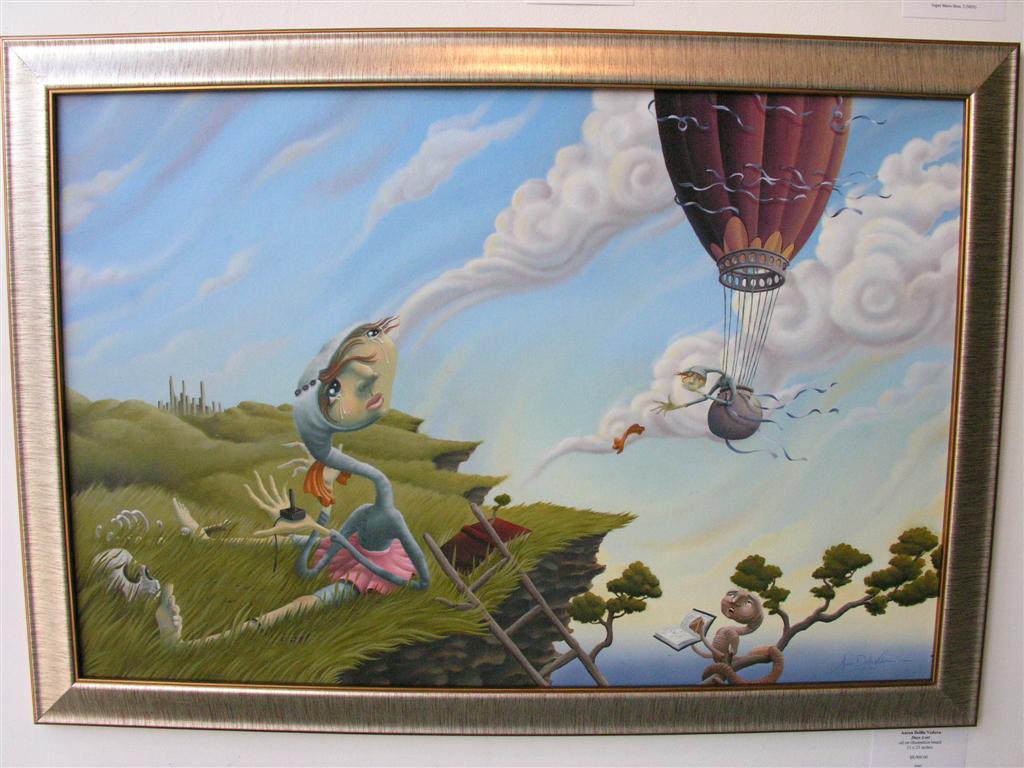
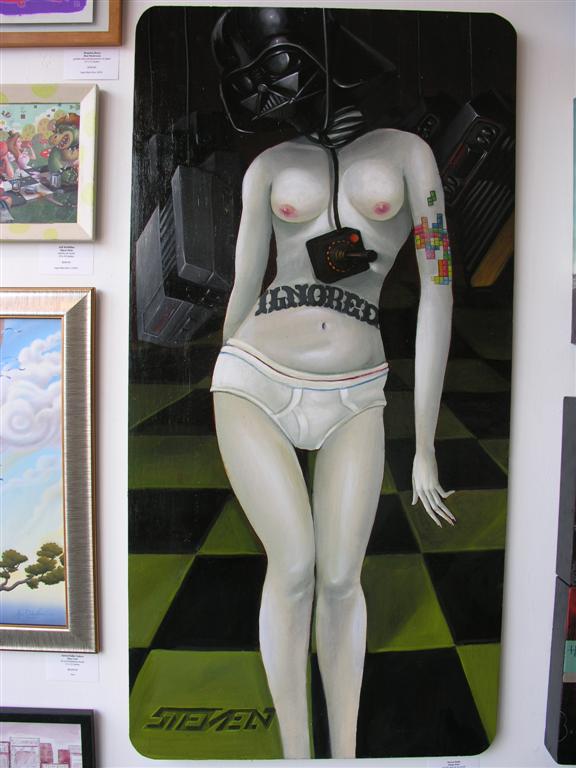
Another day, another reason to move to Los Angeles. Gallery Nineteen Eighty-Eight, located at 7020 Melrose Ave. in L.A., is hosting the second annual I AM 8-BIT exhibition, and... wow. The first series was pretty neat, but this new one is amazing. So much videogame love.

Michael Gagne, Martin Ontiveros
(click image for full-sized version)

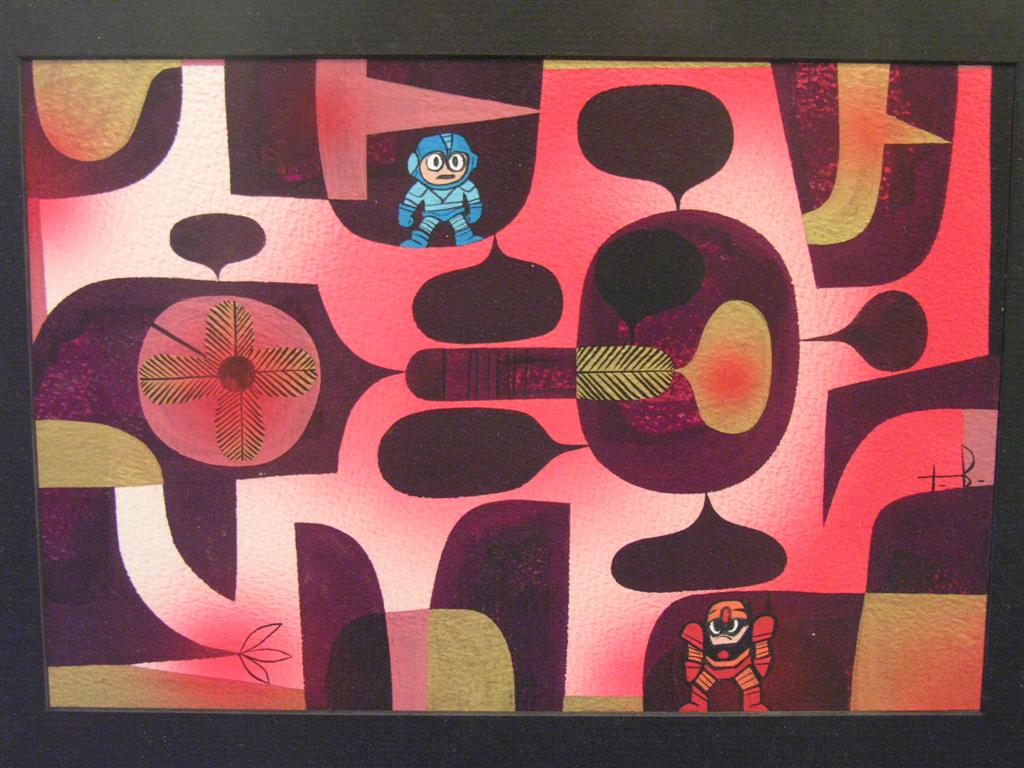
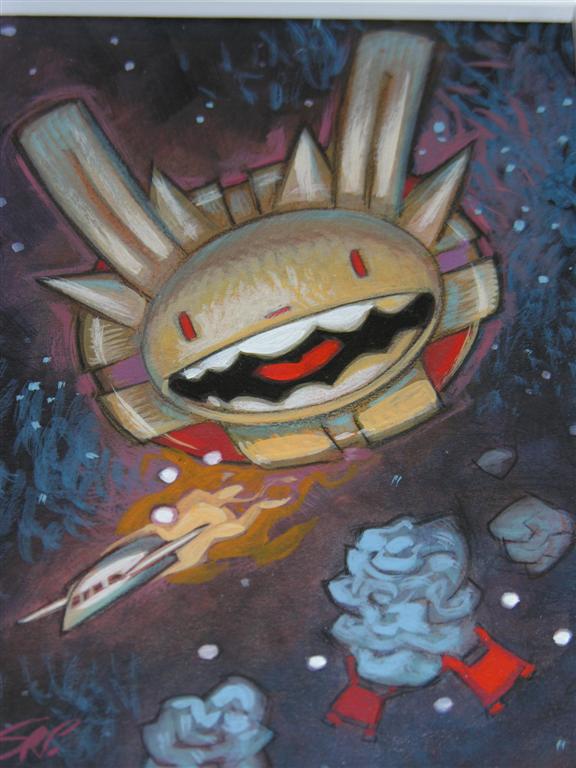
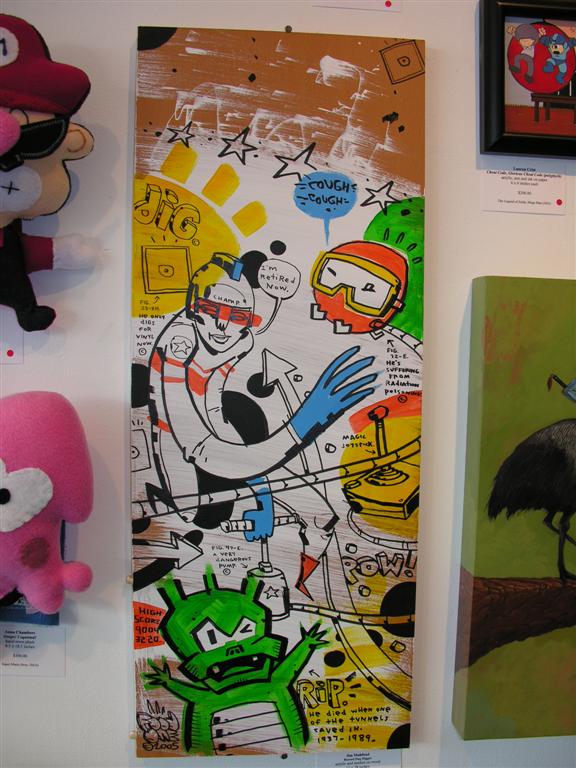
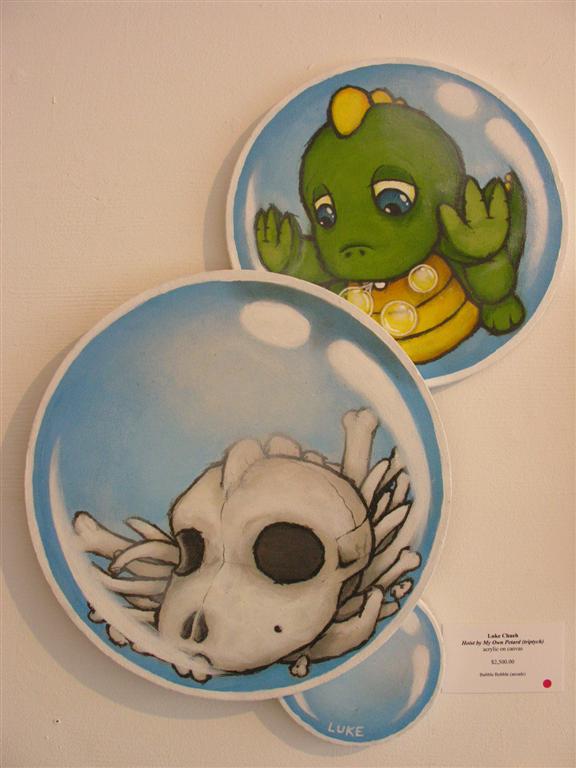
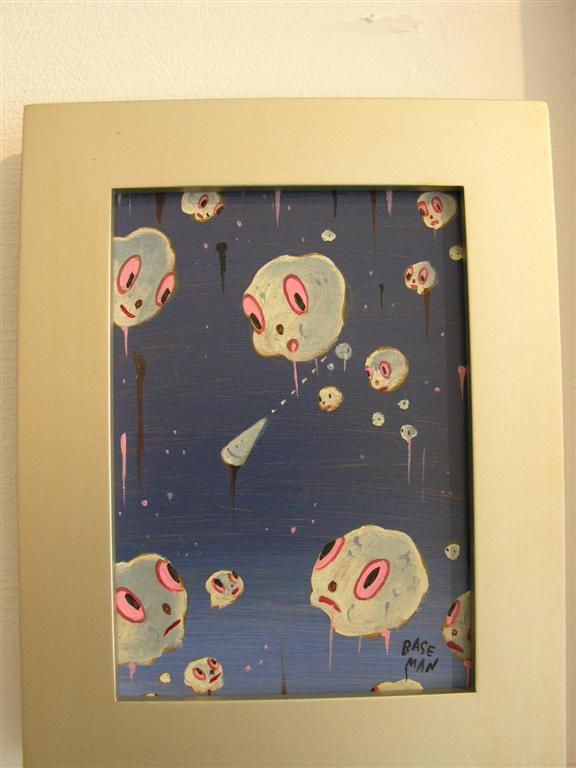
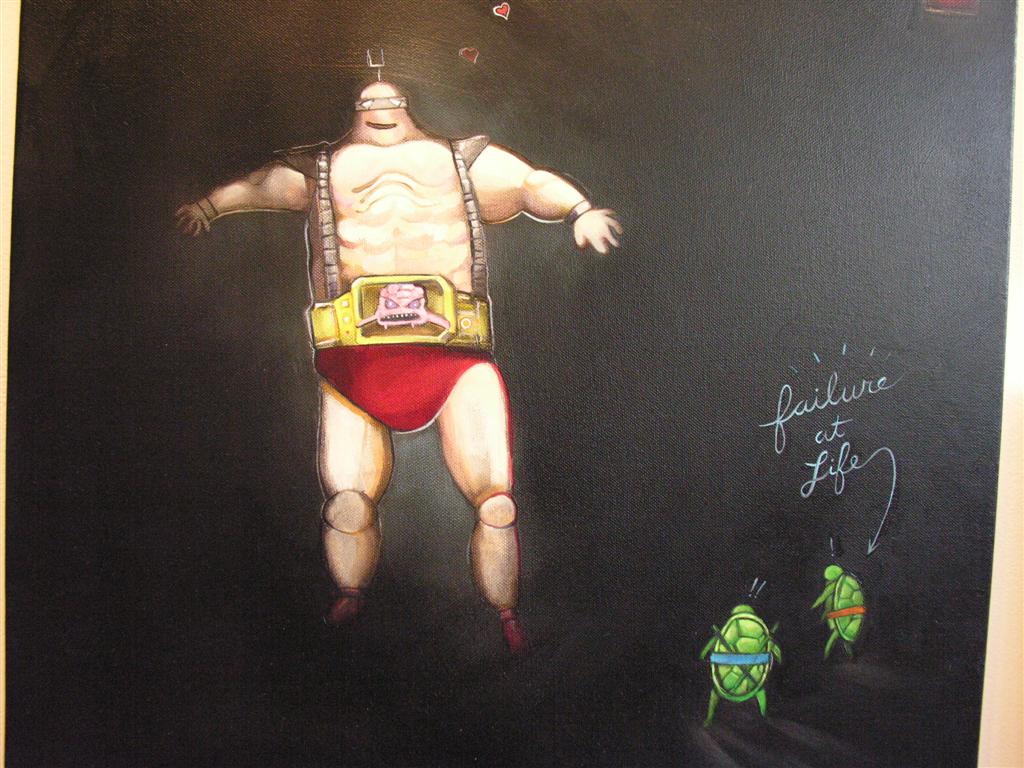
The list of contributors is a veritable who's-who of the contemporary pop surrealism scene: Tim Biskup, Steve Purcell, Jim Mahfood, Luke Chueh, Gary Baseman, Brandon Bird, and dozens more. Who knew that Nintendo was so universal and profoundly influential? Most works draw their inspiration either from the NES roster (Super Mario Bros, Megaman, Metroid) or from the earlier Atari era (Pacman, Asteroids, Donkey Kong,) with few if any references beyond the late '80s. A handful even comment on the nature of videogaming itself.


Jose Emroca Flores, Love Ablan, Yosuke Ueno
(click image for full-sized version)

If you live in or near L.A., you could do worse than to plan a visit to Nineteen Eighty-Eight this weekend. If you don't, you're still in luck. The first I AM 8-BIT collection has been collected and recently published by Chronicle Books, and is readily available at Amazon.com. At under $15 USD, the book is stupidly affordable and you really owe it to yourself to add it to your own library.

Link: I AM 8-BIT website.
Link: Gallery Nineteen Eighty-Eight.
Link: I AM 8-BIT: Art Inspired by Classic Videogames of the '80s at Amazon.

(note: All above photos were originally posted at Vinyl Pulse, an art blog which I heartily endorse and recommend. I cropped them and did some other minor tweaks for presentation's sake but all credit goes to Vinyl Pulse and the original photographer.)